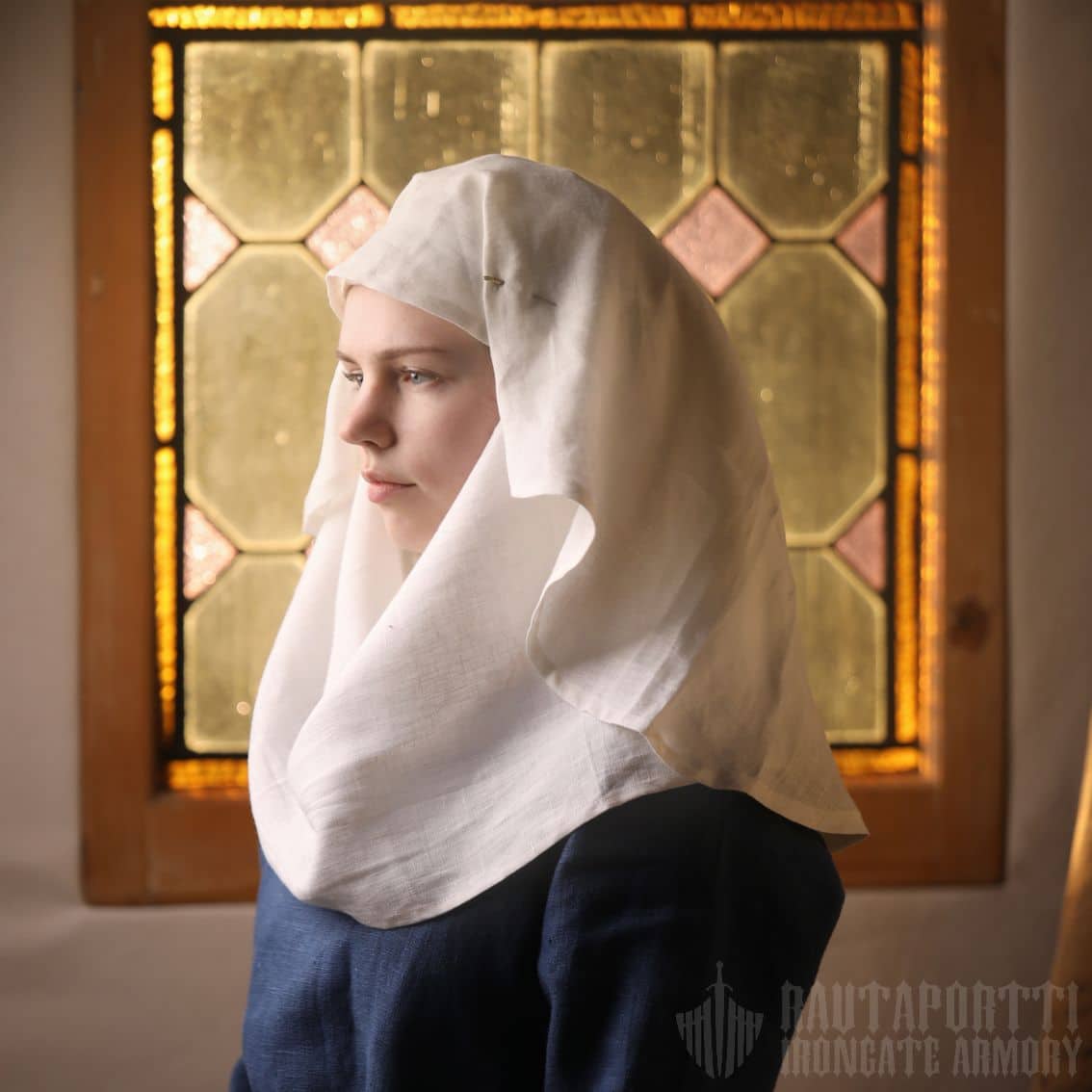
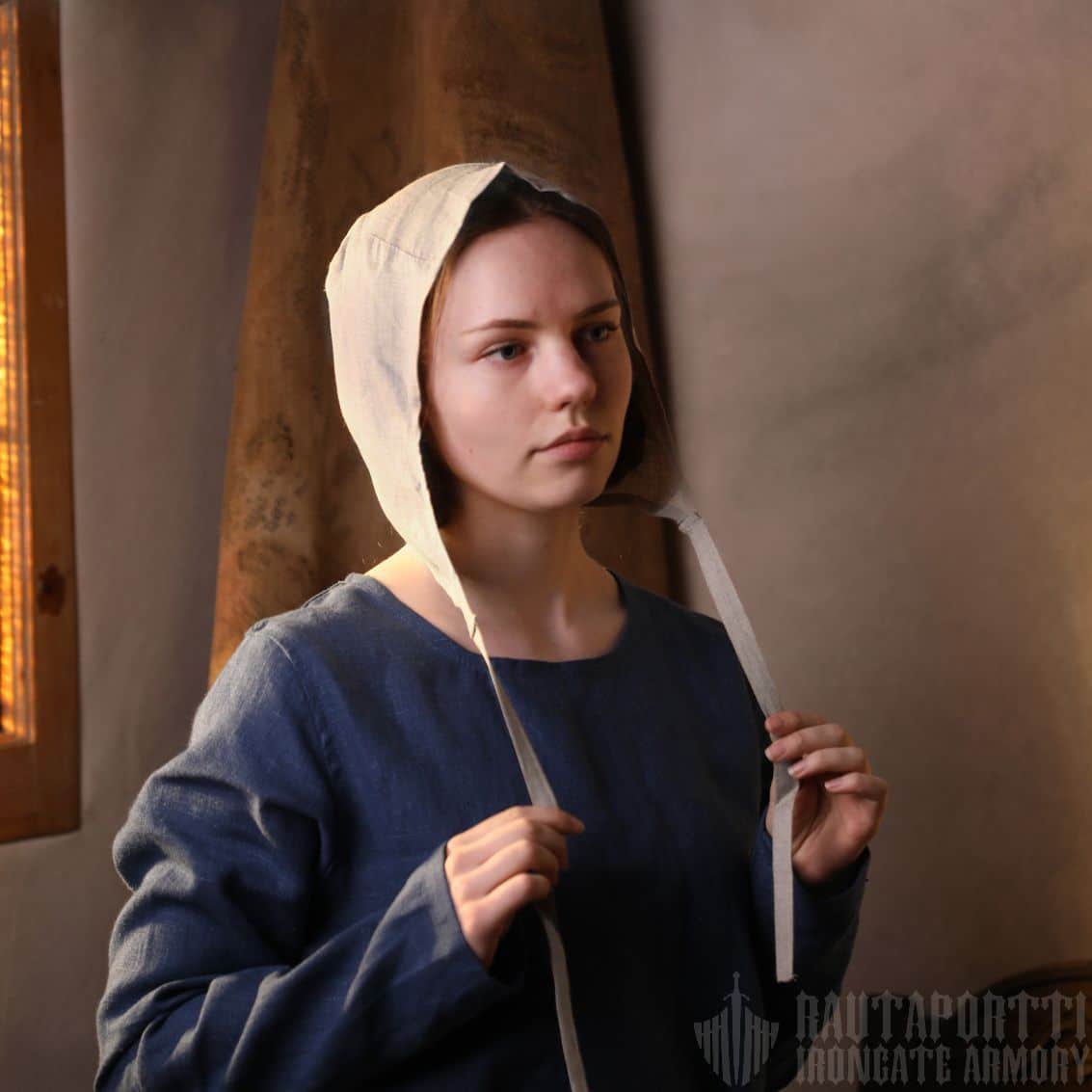
Description of the Product Coifs or biggins, close fitting caps, were worn throughout the medieval period. As other more fashionable hats became popular, the coif was retained as a way of protecting the fancier hat from hair oils. The coif was also worn on its own in all manner of possible situations, be it working on the fields or sleeping, to keep the hair neat and clean. Coifs were used by everyone from the 1100s onward: the clergy, the nobility, knights, peasants, men, women, and children. This coif is a perfect addition to any European period outfit. Linen textiles are one of the oldest fabrics mankind has used, maybe the oldest. Linen is textile made from flax plant. Wild flax was made into textiles already 36 000 years ago in Europe and the plant was domesticated and extensively grown and used in ancient Mesopotamia. Linen was the most widely used fabric also in ancient Egypt. The use and cultivation of flax moved northward in Europe and linen clothing was available throughout Europe all the way to the cold north by late Bronze Age. Flax was grown locally in Scandinavia during the Viking Age and linen was an important commercial good. During the Middle Ages Germany was the main hub growing flax and fabricating linen in almost an industrial scale. The linen of this coif is thin and soft to the touch but still durable and breaths very well. Linen is naturally absorbent and dries faster than cotton. Baltic linen is grown in the Baltic and Nordic countries where long cold winters around the Baltic Sea make this plant and its fibers strong and durable. Properties that our ancestors appreciated. Material: 100 % linen Available in two sizes: S/M and L/XL Available colors: white and natural linen Made by: Karhunhammas - Beartooth